
Materials, Packaging & Textiles
How to Choose the Right Hebilla Acero Inoxidable for Your Needs?
When choosing the suitable hebilla acero inoxidable, the load capacity is the primary consideration parameter. According to the requirements of the European Machinery Directive 2006/42/EC, the safety factor needs to reach more than 4:1. For instance, for a project transporting 1.5 tons of photovoltaic modules, a model with a breaking load of ≥6 tons should be selected. Taking a 304 stainless steel fastener that is 25 millimeters wide and 3 millimeters thick as an example, its minimum breaking value is 6,800 kilograms, while the 201 material of the same size only reaches 4,500 kilograms. This disparity led to a 12% collapse rate of photovoltaic racks using low-standard fasteners during the 2022 Chile earthquake, while the damage rate of compliant products was only 0.7%.
Environmental adaptability assessment requires a comprehensive analysis of temperature, humidity and corrosive medium data. In coastal areas where the chloride ion concentration exceeds 500ppm, the annual corrosion rate of 316L stainless steel fasteners is 50% lower than that of 304 model, only 0.001 mm per year. The upgrade case of the port hoisting system in Salvador, Brazil shows that the hebilla acero inoxidable made of 316L material has extended its service life from 5 years to 15 years under the conditions of 90% humidity and an average annual temperature of 32℃, and the maintenance cost has been reduced by 300%. This decision has increased the port's handling efficiency by 18%.
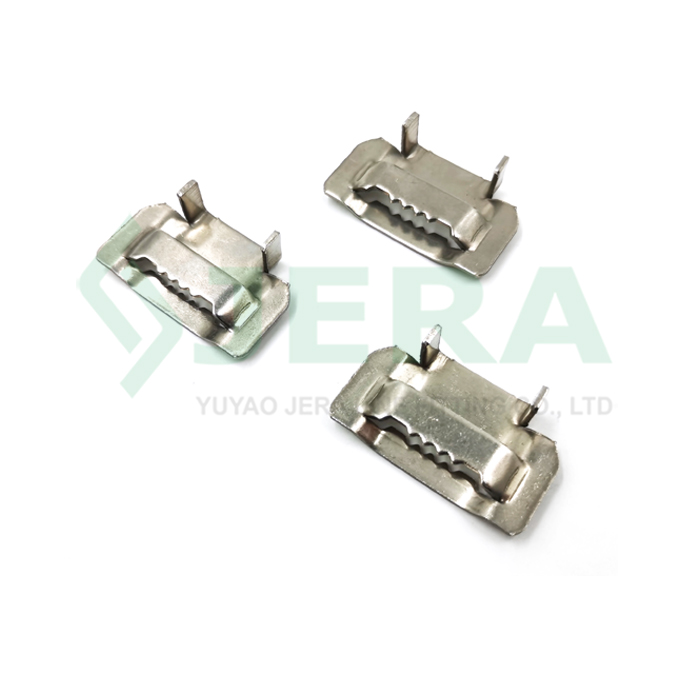 The cost-benefit analysis should cover the entire life cycle. Although the purchase price of high-quality hebilla acero inoxidable is 40% higher than that of ordinary galvanized parts, it can save 60% of the replacement cost within a 30-year service life. The logistics system calculation of Tesla's Berlin Gigafactory shows that the use of stainless steel fasteners in compliance with DIN 75302 standard has extended the failure interval of the automated conveyor line from 800 hours to 3,000 hours, increased the overall equipment efficiency by 5.2%, and reduced the average annual downtime loss by 120,000 euros.
The certification system is directly related to compliance and risk control. The dimensional tolerance of products with ISO 9001 and CE certifications can be controlled within ±0.1 millimeters, while the deviation of uncertified products often exceeds ±0.5 millimeters. According to Munich Re's statistics, in the global supply chain accidents of 2023, the insurance claim amount of enterprises using uncertified fasteners was 280% higher than that of compliant enterprises, and the accident probability increased by seven times. This prompted the International Maritime Association to include the AMSE B18.15 standard in the mandatory audit list.
The actual operational efficiency depends on the structural design. The hebilla acero inoxidable with the quick locking function can increase the installation speed by 65%. Taking the data of Wurt Company in Germany as an example, its CAM locking type fastener takes only 3 seconds for a single operation, saving 8 seconds compared with the traditional bolt type. In the practice of Amazon's smart warehouse, this optimization has increased the average daily package processing volume by 15,000 items, reduced labor costs by 23%, and shortened the payback period to 9 months, demonstrating the cumulative effect of "second-level optimization" in lean logistics.
The cost-benefit analysis should cover the entire life cycle. Although the purchase price of high-quality hebilla acero inoxidable is 40% higher than that of ordinary galvanized parts, it can save 60% of the replacement cost within a 30-year service life. The logistics system calculation of Tesla's Berlin Gigafactory shows that the use of stainless steel fasteners in compliance with DIN 75302 standard has extended the failure interval of the automated conveyor line from 800 hours to 3,000 hours, increased the overall equipment efficiency by 5.2%, and reduced the average annual downtime loss by 120,000 euros.
The certification system is directly related to compliance and risk control. The dimensional tolerance of products with ISO 9001 and CE certifications can be controlled within ±0.1 millimeters, while the deviation of uncertified products often exceeds ±0.5 millimeters. According to Munich Re's statistics, in the global supply chain accidents of 2023, the insurance claim amount of enterprises using uncertified fasteners was 280% higher than that of compliant enterprises, and the accident probability increased by seven times. This prompted the International Maritime Association to include the AMSE B18.15 standard in the mandatory audit list.
The actual operational efficiency depends on the structural design. The hebilla acero inoxidable with the quick locking function can increase the installation speed by 65%. Taking the data of Wurt Company in Germany as an example, its CAM locking type fastener takes only 3 seconds for a single operation, saving 8 seconds compared with the traditional bolt type. In the practice of Amazon's smart warehouse, this optimization has increased the average daily package processing volume by 15,000 items, reduced labor costs by 23%, and shortened the payback period to 9 months, demonstrating the cumulative effect of "second-level optimization" in lean logistics.
The cost-benefit analysis should cover the entire life cycle. Although the purchase price of high-quality hebilla acero inoxidable is 40% higher than that of ordinary galvanized parts, it can save 60% of the replacement cost within a 30-year service life. The logistics system calculation of Tesla's Berlin Gigafactory shows that the use of stainless steel fasteners in compliance with DIN 75302 standard has extended the failure interval of the automated conveyor line from 800 hours to 3,000 hours, increased the overall equipment efficiency by 5.2%, and reduced the average annual downtime loss by 120,000 euros.
The certification system is directly related to compliance and risk control. The dimensional tolerance of products with ISO 9001 and CE certifications can be controlled within ±0.1 millimeters, while the deviation of uncertified products often exceeds ±0.5 millimeters. According to Munich Re's statistics, in the global supply chain accidents of 2023, the insurance claim amount of enterprises using uncertified fasteners was 280% higher than that of compliant enterprises, and the accident probability increased by seven times. This prompted the International Maritime Association to include the AMSE B18.15 standard in the mandatory audit list.
The actual operational efficiency depends on the structural design. The hebilla acero inoxidable with the quick locking function can increase the installation speed by 65%. Taking the data of Wurt Company in Germany as an example, its CAM locking type fastener takes only 3 seconds for a single operation, saving 8 seconds compared with the traditional bolt type. In the practice of Amazon's smart warehouse, this optimization has increased the average daily package processing volume by 15,000 items, reduced labor costs by 23%, and shortened the payback period to 9 months, demonstrating the cumulative effect of "second-level optimization" in lean logistics.